
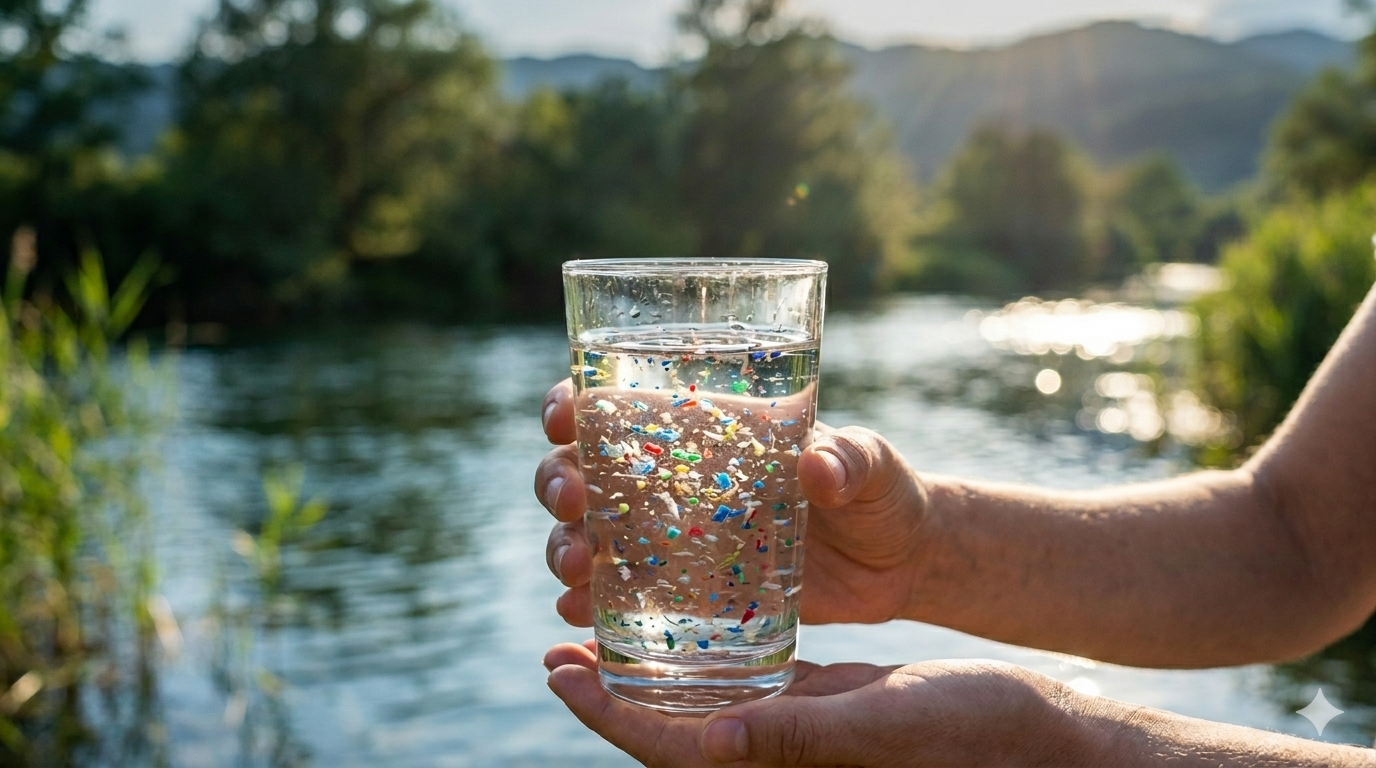
n recent years, microplastics in drinking water have become one of the most discussed topics in public health and water quality. These microscopic plastic particles are now found almost everywhere: in oceans, soil, air, and especially in the tap water we drink every day.
Numerous scientific studies have shown that microplastics can enter the food chain and accumulate in our bodies. Increasing research is investigating the potential effects of these particles on human health, including infertility, cardiovascular disorders, elevated cholesterol, and possible links to certain forms of cancer.
To explore these issues further, ProAcqua participated in the international HDUEO event organized by GWS in Genoa on Friday, February 27—a key opportunity for discussion among companies, researchers, and water treatment experts. The event focused not only on microplastics but also on emerging contaminants such as PFAS, which are increasingly present in water resources.
In this article, we will examine:
- what microplastics are
- why they are present in municipal water
- the potential health risks they pose
- why drinking water is one of the main sources of exposure
- and, most importantly, how to effectively protect yourself through domestic water filtration
What Are Microplastics?
Microplastics are tiny plastic particles measuring less than 5 millimeters. In many cases, they are even much smaller, reaching sizes below 5 microns, while nanoplastics can be even tinier.
These particles can come from different sources:
Primary Microplastics
They are manufactured directly at microscopic sizes and used in various industrial processes or products.
Secondary Microplastics
They originate from the breakdown of larger plastic objects, such as:
- bottles
- bags
- packaging
- synthetic fabrics
- tires
Over time, exposure to sunlight, water, and mechanical action fragments these materials into progressively smaller particles.
As a result, today microplastics are practically everywhere in the environment.e.
Why Microplastics Are Also Present in Tap Water
Many people think that tap water is completely free of modern contaminants like microplastics. In reality, the situation is more complex.
Today, microplastics are widespread:
- in rivers
- in lakes
- in seas
- in soil
- in the atmosphere
- in groundwater
These particles can be transported through various environmental pathways and inevitably end up in the reservoirs used for municipal water supply.
Moreover, their extremely small size makes them very difficult to remove completely with the conventional treatment systems used in water purification plants.
Scientific studies have shown that traces of microplastics have been detected in drinking water in various parts of Italy, both in bottled water and tap water.
This does not mean that tap water is uncontrolled or unsafe: monitoring systems are very strict. However, microplastics are an emerging contaminant that is not yet fully regulated in water quality standards.
How Microplastics Reach Groundwater
One of the most problematic characteristics of microplastics is their extreme mobility in the environment.
These particles can be transported by:
- rainwater
- rivers and streams
- wind
- wastewater
Over time, they can infiltrate the soil and reach groundwater, which is one of the main sources of drinking water.
Due to their microscopic size, many of these particles are able to bypass the natural barriers of the soil and move with water underground.
This explains why microplastics have now been detected in numerous natural environments, even far from major sources of pollution.
Microplastics and Human Health: What Studies Say
One of the reasons microplastics are attracting so much scientific attention concerns their potential effects on human health.
In recent years, several studies have detected the presence of microplastics:
- in human blood
- in the lungs
- in the placenta
- in the digestive tract
This means that these particles can enter our bodies and accumulate in tissues.
The long-term effects are still under investigation, but some research has already highlighted possible links to various health problems.
Possible Health Effects of Microplastics
Among the effects potentially associated with exposure to microplastics and nanoplastics are:
Infertility
Some studies suggest that microplastics may interfere with the endocrine system and fertility in both men and women. This could occur through chemicals present in plastics, such as additives and plasticizers, which can have endocrine-disrupting effects.
Increased Cholesterol
Experimental research indicates that exposure to microplastics may be linked to alterations in lipid metabolism, potentially affecting blood cholesterol levels.
Cardiovascular Issues
Recent studies have begun investigating possible connections between the presence of microplastics in the body and inflammatory processes that could impact cardiovascular health.
Possible Links to Cancer
Microplastics can carry various potentially toxic or carcinogenic chemicals on their surfaces. For this reason, some researchers are studying whether prolonged exposure could increase the risk of certain types of cancer.
Drinking Water Is One of the Main Sources of Exposure
One of the most interesting findings from research is that drinking water represents one of the main pathways for microplastic exposure.
Every day, we consume water:
- by drinking it
- when preparing beverages
- while cooking
- when making coffee or tea
Even small amounts of microplastics in water can contribute to overall exposure over time.
According to some scientific estimates, the annual intake of microplastics through food and water could be much higher than previously thought.
For this reason, more and more people are starting to look for ways to reduce the presence of contaminants in their household water.
How to Reduce Microplastics in the Water You Drink
The most effective way to reduce microplastics in household water is to filter it before drinking.
Advanced filtration systems can remove a significant portion of these particles using membranes or filters designed to capture very small contaminants.
However, not all filters are the same: filtration efficiency depends on the technology used and the size of the particles the filter can retain.
ProAcqua Solutions Against Microplastics
At ProAcqua, we have been working for years in the water treatment sector with the goal of providing effective and technologically advanced solutions to improve the quality of household water.
To address the problem of microplastics, we offer two levels of filtration.
SN Filter: ProAcqua’s Standard Protection
All ProAcqua systems come equipped with the SN filter, designed to remove various impurities present in drinking water.
This filter represents the basic level of protection and helps improve water quality by eliminating numerous contaminants.
The SN filter is standard on all ProAcqua systems, providing a first level of safety for the water you consume daily by blocking microplastics.
NN Nanofiltration Filter: Advanced Protection Against Even Nanoplastics
Per For those seeking an even higher level of protection, ProAcqua also offers the NN filter with hollow-fiber nanofiltration.
This technology uses highly advanced membranes capable of filtering particles as small as 0.01 microns.
Such a tiny size allows the filter to retain not only many microplastics but also nanoplastics—particles that are even smaller and more difficult to capture with traditional filtration systems.
The NN filter can be installed on the following models:
- OMDE 60 (all models)
- OMIN
- WLINK
- HRC MINI
Thanks to this technology, it is possible to achieve an extremely advanced level of filtration, designed for those who want the highest quality in household water..
A Concrete Commitment to Water Quality
ProAcqua’s participation in the HDUEO event organized by GWS in Genoa underscores our commitment to staying constantly informed on the most important topics related to water quality.
During the event, in-depth discussions focused on:
- microplastics
- nanoplastics
- PFAS
- emerging contaminants
These topics are becoming increasingly central in the water treatment sector and in protecting public health.
At ProAcqua, it is essential for us to continue investing in research, innovation, and training to provide our customers with ever more effective solutions.
Conclusion
Microplastics represent one of the most important environmental challenges of our time.
Their widespread presence in the environment makes it increasingly necessary to pay attention to the quality of the water we drink every day.
Domestic water filtration offers a simple and effective solution to improve drinking water quality and reduce the presence of emerging contaminants.
Thanks to advanced filtration technologies such as the SN filter and the NN nanofiltration filter, ProAcqua systems allow you to obtain purer, better-controlled water directly at home.
Because water quality is not just a matter of taste—it is, above all, a matter of health.